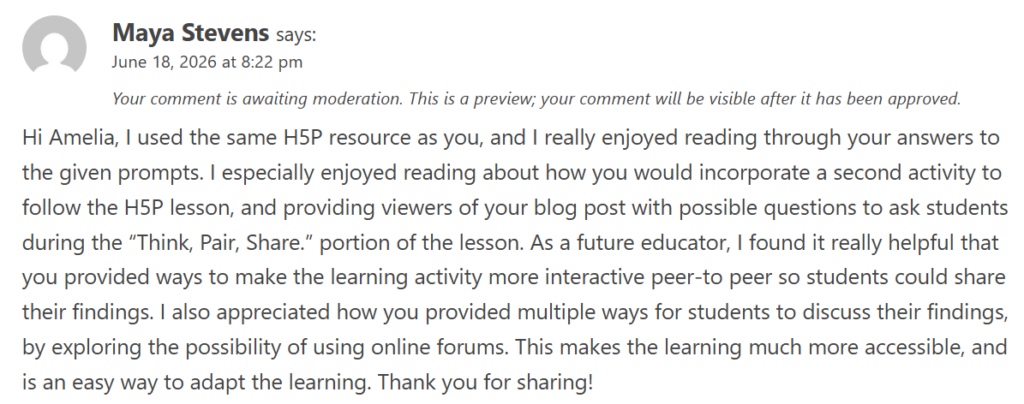
Link to post: Blog Post 4 – EDCI 335
My comment:
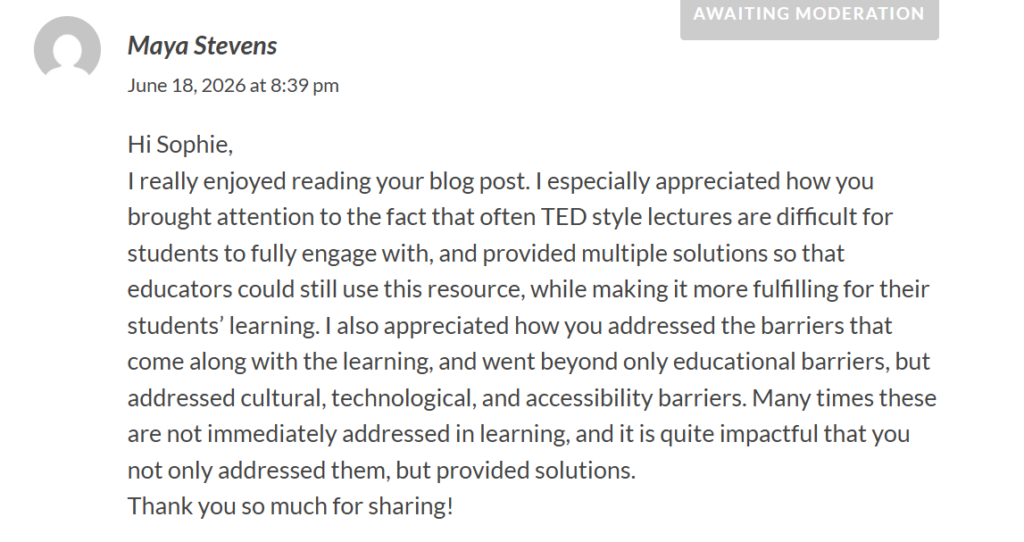
Link to post: Post 4 – Sophia Thomas
My comment:
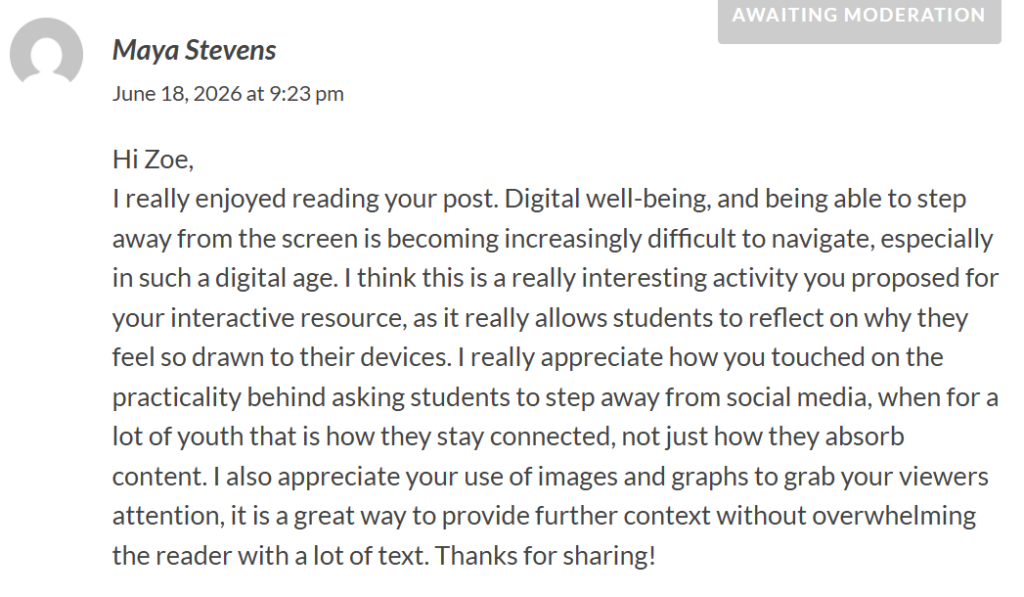
Link to post: Post 3 – Zoe Kinvig
My comment:
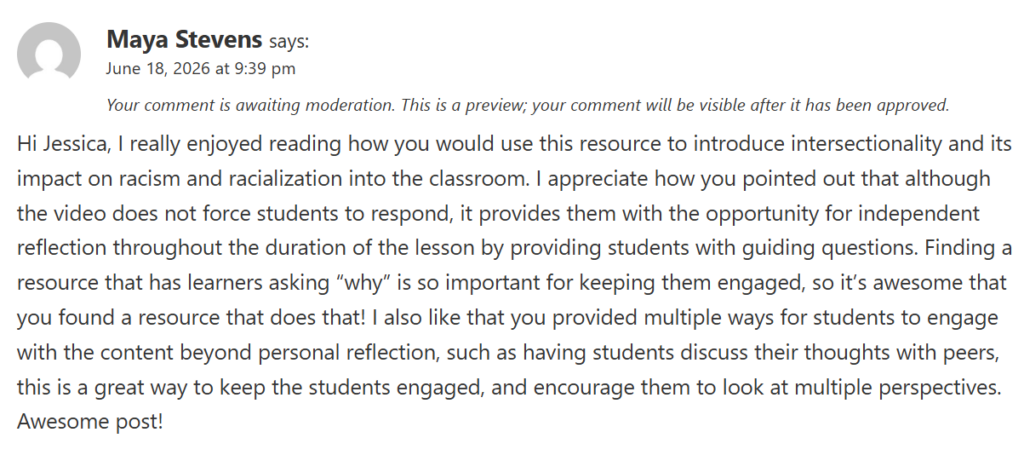
Link to post: Blog Post #4- Video Interaction – Jessica’s EDCI summer ’26 blog
My comment:
Link to post: Blog Post 4 – EDCI 335
My comment:
Link to post: Post 4 – Sophia Thomas
My comment:
Link to post: Post 3 – Zoe Kinvig
My comment:
Link to post: Blog Post #4- Video Interaction – Jessica’s EDCI summer ’26 blog
My comment:
In a primarily digital age, there are more and more ways for students to interact with the content they are learning, because of the advancements in educational technology, students are able to interact with learning materials, peers, and instructors more easily and in more diverse and adaptable ways. There are 3 main types of interactive learning when using technology: inherent activity, designed activity, and user-generated interactivity. For more information on these three types of student learning interaction, click this link. For this final post, I will be looking at inherent interactivity through the use of eCampusOntario H5P Studio.
My Chosen Interactive Learning Activity
After looking into the brief selection of learning activities, I selected Microaggressions: An Ally’s Guide to Fighting Gender Bias. This activity explores microaggressions both within and outside of the work environment and educates students on how to recognize/confront them. This activity aligns quite well with our interactive learning resource, which is centred around confronting gender bias and stereotypes within the workforce. Feel free to click the link and give the resource a try!
This resource requires students to read through a series of explanations and descriptions of what microaggressions are (what they look like, what roles are played, etc.), before being asked to partake in a series of scenarios where learners watch a microaggression and then are asked what the most appropriate solution to the microaggression would be. This would be considered an “interactive activity”, as students are actively engaging with the material and students are required to respond and reflect at the end of each activity.
Beyond the built-in activity, students can interact with the content by taking time before the lesson to discuss with peers what they believe microaggressions to look like within the workforce, as well as taking time after the activity to discuss and reflect on times they have witnessed microaggressions in real life. This would be incredibly beneficial to students because it would allow the instructor time to provide feedback to students and check for understanding within the lesson.
If I were to do this activity in a learning environment, I would create a follow-up activity to further assess students’ understanding of the content. A good way to do this would be through a simple exit ticket that would allow students time to reflect on their learning, as well as process the information that they have learned. The original activity can be slightly overwhelming because of the amount of content it provides, and students may begin to select the correct answers because it matches a pattern, and not because they fully understand the reasoning. Creating an exit ticket allows students to reflect on their own learning, while also providing the instructor with a chance to see where there may be common confusion or lack of understanding. This activity could help students develop critical thinking skills by asking questions such as “Why does this solution work?”
This activity could be improved by designing it to be more inclusive. Although this activity touches on important topics, it only targets one specific group, women. This is problematic because gender stereotypes, biases, and microaggressions affect everyone, and it is important to acknowledge how impactful and harmful they are for everyone. This activity could be made more inclusive by having students explore microaggressions and gender stereotypes that they have witnessed or heard of in real life before beginning the activity to make it more gender neutral and inclusive.
Resources:
https://h5pstudio.ecampusontario.ca
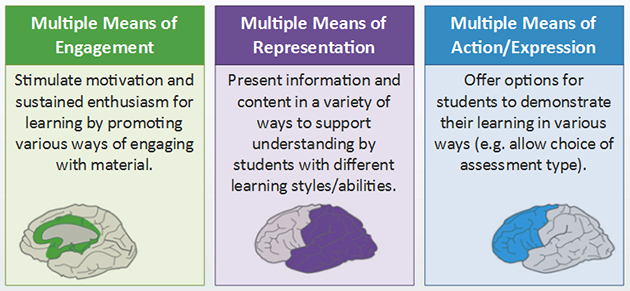
This week in EDCI 335, we explored UDL and Inclusive Learning Designs, two powerful tools when it comes to making learning accessible, adaptable, and, most importantly, an enjoyable experience for all learners. UDL encompasses 3 main means to create positive learning experiences for students: Engagement, Expression, and Representation. We have included those means into our interactive learning resource in multiple ways.
Engagement:
For engagement, our interactive learning resource gives students multiple ways to engage with the learning, both individually and with their peers. Activities such as Direct Impact of Gender Stereotypes in the Workforce and The History Behind Gender Roles use “Think, Pair, Share” to quietly reflect and inquire independently about how gender bias and stereotypes within the workforce are impactful and how they have been impactful throughout history before sharing their thoughts and findings with peers. This means of both social and independent engagement with the material allows students to gain multiple perspectives, as well as explore their own inquiries. This is impactful for the students’ learning because it promotes a more active means of learning, rather than the more passive lecture style of learning. “Think, Pair, Share” also allows students to build confidence in their learning when provided with the low-stakes environment of sharing their thoughts with their peers.
Representation:
Considering representation, our interactive learning resource provides students with multiple means of presenting the information. We provide students with visual context in the second portion of our lesson, Social Influence on Gender Stereotypes, using older advertisements, which offer multiple symbols they can recognize and recall later. We also build student knowledge by ensuring each of our subtopics and their activities can transition smoothly from one subject to another so students can use their prior knowledge and build on it. An example of this is during the transition from our first mini-lesson, Gender Stereotypes in the Workforce, where students explore specific gender stereotypes and discuss what may have caused them to think that way and our second lesson, Social Influence on Gender Stereotypes, where students explore specific examples of media curating certain gendered ways of thinking.
Action/Expression
The universal learning design ensures that students have multiple ways of demonstrating their understanding. Our lesson provides students with multiple opportunities to demonstrate their learning through communication with their peers and instructors during “Think, Pair, Share.” The lesson also gives students opportunities to demonstrate their understanding using multimedia devices, such as Padlet, or creating mind maps within groups to display what they have learned, from where they started with the first activity, to exploring how to break common gender stereotypes and confront their own biases. Our lesson ensures that it can be easily adapted to be done both with and without technology, and can be adapted easily to fit student needs.
Inclusive Learning:
Our resource ensures that all students have an accessible opportunity to learn by providing free resources that can be accessed in a classroom setting or from home. We also made sure that the learning could be done digitally or analogously, or a mix of the two. We have ensured that our lessons can be easily adapted to fit individual student needs and that student learning is centred around inclusion and collaboration. Students can do all activities independently, in pairs, or in groups, and we have made sure that the learning that is being done allows space for student choice, specifically in the final mini-lesson, Breaking the Stereotype, where students can easily choose how they wish to display their understanding and reflection in a way that best fits their needs.
Resources:
Inclusive education resources – Province of British Columbia
What is Inquiry-Based Learning and Why is it Important?
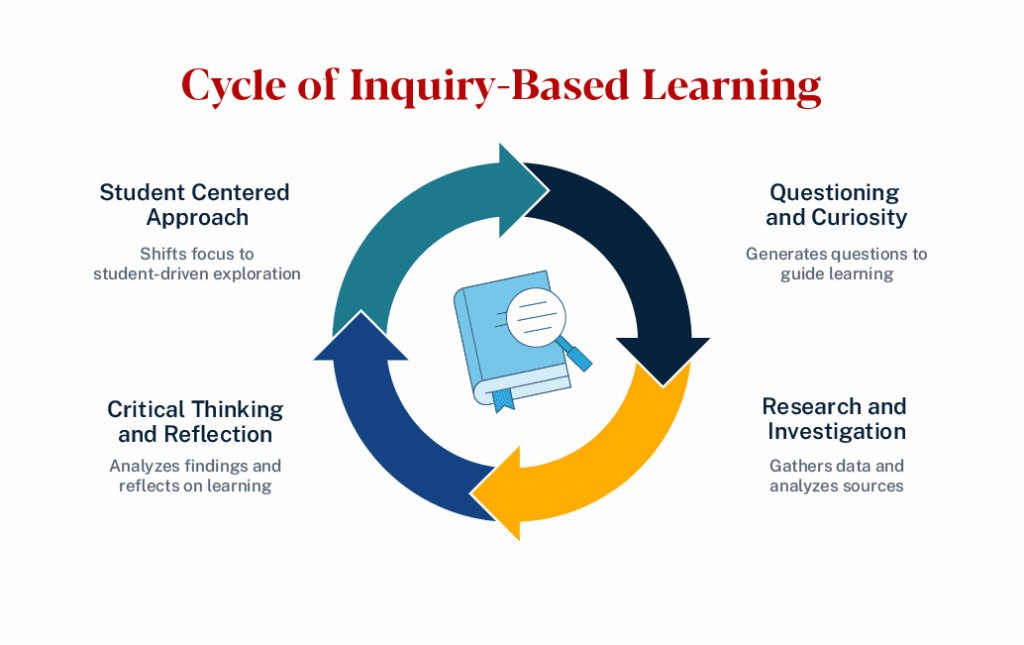
Inquiry-based learning allows students to step away from the lecture mode of learning and into real-life scenarios by allowing students to ask questions, research, discuss with peers, and come to conclusions based on their own personal findings, rather than being fed the information or the “correct” answer. Inquiry-based learning encourages students to ask their own questions and explore their own curiosities, allowing them independence in their educational journey. This independence not only allows for personal and educational growth but also engagement through choice, curiosity, and reflection. Inquiry-based learning is also important because it encourages students to collaborate with peers. Students can compare their findings and ask for alternate perspectives, which also encourages communication and relationship building between peers. Inquiry-based learning doesn’t tell students what they should think, but encourages them to explore how to think.
The Four Main Steps to Inquiry Learning
In What the Heck Is Inquiry-Based Learning? Heather Wolpert-Gawron states that there are four main steps to inquiry-based learning:
How Does This Apply to our Resource?
For our resource, we will be exploring Socially Constructed Gender Roles and Stereotypes in the Workforce: Education Through Inquiry-Based Learning. This resource is made to be used in a grade 10-12 Career Life Connections course and encourages students to look at what stepping into the workforce means for all people and the importance of looking more deeply into the effect of stereotypes and stigma within the workforce.
Inquiry-based learning works quite well for this resource for many reasons, as a lot of the work surrounding these topics requires students to look critically into why these stereotypes exist in the first place, and why they are unnecessary and impactful, asking why it is the way it is and how we can change it. Much of the classwork entails students using learning methods such as Think, Pair, Share, which involves both the independent inquiry of asking yourself: what stands out to you, what questions do you have, and how can you answer them, as well as the communicative aspect of talking to your peers and gaining their insight on the topic, to broaden your thinking. Think, Pair, Share is a quick and easy way to encompass Wolpert-Gawron’s first step of inquiry-based learning, as well as engage students through the use of independent inquiry and allow them to explore their own thoughts on the given subject, instead of telling them what they need to know or what they should be curious about.
Students will also use inquiry-based learning to reflect on what they have learned throughout the lesson, this activity will come at the end of the assignment during the activity Breaking the Stereotype where student’s will be asked to reflect on what they have done throughout the lesson, back to the first activity of Direct Impact of Gender Stereotypes in the Workforce and reflect on how they can break certain gender-based stereotypes, why the stereotypes are impactful, and why they are untrue. This activity applies greatly to steps 3 and 4 of Wolpert-Gawron’s inquiry-based learning, as it allows students to both demonstrate their understanding and reflect on what they learned and how they were able to learn it.
Overall, inquiry-based learning is vital to our resource, as we ask learners to independently explore, question, and confront the biases they are faced with every day, both in and out of the workforce. With this being a resource meant for older students, the independent discovery process that many of these activities give them allows them to use their critical thinking skills to come to their own conclusions and explore their own curiosities. This resource uses inquiry-based learning to foster students’ independent thinking, critical thinking, reflection, and, most importantly, to consider how they think.
Sources
What the Heck Is Inquiry-Based Learning? | Edutopia
Inquiry-Based Learning | Centre for Teaching and Learning
For week 1 of EDCI 335, we were given a series of prompts to choose from. I chose the prompt discussing online learning and how student motivation can be negatively impacted by online and/or asynchronous learning modules. I will be drawing information from my own personal experience with online learning in a class taken earlier this year, and how my learning and motivation were impacted by looking at course motivations through both the Self Determination Theory, as well as the ARCS Model.
What initially motivated you to start with?
For this particular online class, we were asked to choose a “passion project” to work on throughout the semester. As I am in the BEd (Bachelor of Education) program, I was motivated to write a short children’s book about anxiety, and common coping strategies that can be used and implemented for students to use. It was meant to be a resource for both students and teachers, by providing a thorough resource of not only strategies for coping with anxiety and mental health struggles, but also allowing for open conversations within classrooms about the idea of having big feelings, and that it is okay to have those big feelings. I felt as though, especially in the younger years, students are left to constantly adapt, learn, and change throughout their school years, and all these new activities and settings can leave young children overwhelmed and frustrated. Opening up the topic of why we feel that way and how we deal with it can help students feel less alone. I was definitely motivated at the beginning of this class by the sense of autonomy we were given, as well as the fact that I felt the assignment gave me a sense of purpose, as it could be a resource in later years to both myself and others.
When did your motivation start to shift? Why?
Although I started the passion project extremely motivated and excited to implement my own knowledge in both child development and mental health into a helpful resource, my motivation quickly shifted roughly three weeks into the assignment, or more specifically, once I had submitted my first 2 or so assignments in relation to the passion project. I found that once my work was handed in, it was quickly returned with little to no feedback, leaving me slightly questioning where to go next with my work or how to improve upon it. This discouraged my motivation because it did not give me a path of where to go next, or show me that there was much care for my work/learning within the class module.
What aspects of the design contributed to the disengagement?
I found that not only was the lack of engagement and feedback discouraging me from performing well within the class, but the fact that the class was set up as a “Complete or Incomplete” module, so not only was feedback minimal, but there was no assessment, standards, or guidelines to follow when doing our work aside from the requirement of multimedia inclusions (images, hyper-links etc.) This was extremely discouraging because it took the reasoning out of the learning. There was no motivation to digest the lessons, and little reason to implement them into our demonstrations of understanding, because we were not being assessed on them.
Which learner needs were not well supported?
I experienced little to no progress or accomplishment throughout the course due to minimal feedback and the absence of grades. There was no accomplishment when completing my work, which ties into the ARCS model of satisfaction. I also felt as though there was little to no support through the learning process, not that I was not encouraged, and the comments left by the instructor were always positive, but since there was no constructive feedback or support, I felt as though I was often left guessing about what to do on the next steps.
How might the experience have been designed differently?
I feel as though it would have been helpful for there to be more engagement with others during our passion projects, whether that was feedback from classmates, or peers, it would have allowed for more opportunities for guidance, criticism, and communication. I also feel as though with clearer expectations (what each assignment progression should look like, how our work should be formatted, etc) and an opportunity for assessment, I would have felt more motivated to complete the tasks to the best of my ability, rather than to just get a COM at the end of the semester.
© 2026 Maya Stevens – EDCI 335
Theme by Anders Noren — Up ↑

Recent Comments