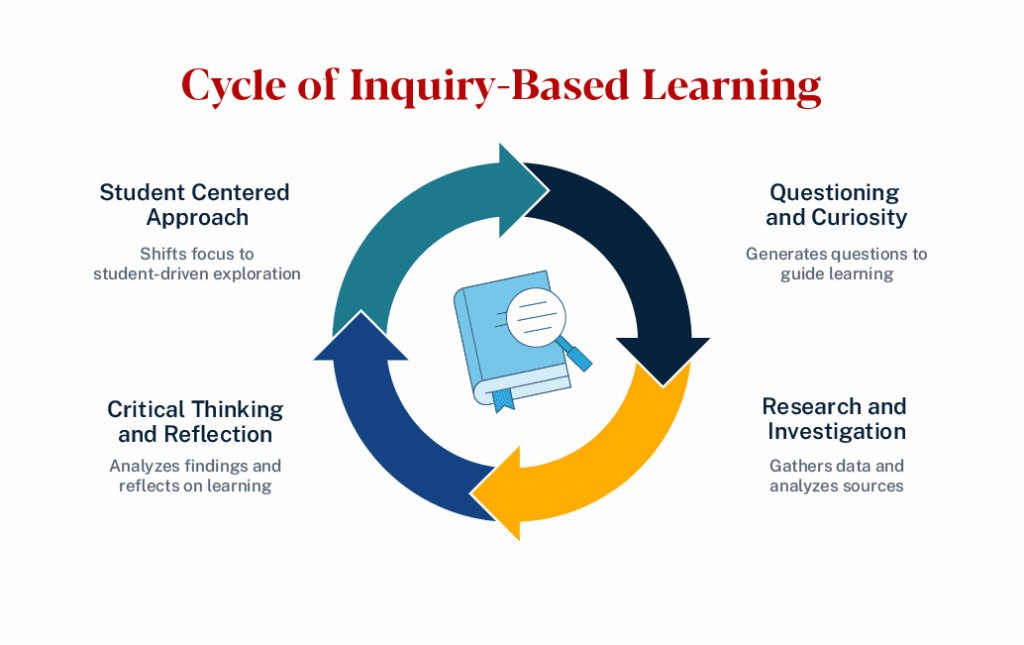
What is Inquiry-Based Learning and Why is it Important?
Inquiry-based learning allows students to step away from the lecture mode of learning and into real-life scenarios by allowing students to ask questions, research, discuss with peers, and come to conclusions based on their own personal findings, rather than being fed the information or the “correct” answer. Inquiry-based learning encourages students to ask their own questions and explore their own curiosities, allowing them independence in their educational journey. This independence not only allows for personal and educational growth but also engagement through choice, curiosity, and reflection. Inquiry-based learning is also important because it encourages students to collaborate with peers. Students can compare their findings and ask for alternate perspectives, which also encourages communication and relationship building between peers. Inquiry-based learning doesn’t tell students what they should think, but encourages them to explore how to think.
The Four Main Steps to Inquiry Learning
In What the Heck Is Inquiry-Based Learning? Heather Wolpert-Gawron states that there are four main steps to inquiry-based learning:
- Students develop their own questions based on the given topic they are learning
- Students research the topic in and out of class time
- Wolprt-Gowen emphasizes the importance of the majority of this work being done in class time so it can be supervised by the head instructor/researcher
- Have students present what they’ve learned. This demonstrates whether the students can absorb and understand the content or whether they are just putting answers on a page.
- At the end of the project, have students reflect on what worked and what didn’t work.
- This one is exceptionally important for students because everyone’s learning process is different, and allowing students to reflect on what worked and what didn’t helps them explore the fundamentals of how to think (that’s the big idea!)
How Does This Apply to our Resource?
For our resource, we will be exploring Socially Constructed Gender Roles and Stereotypes in the Workforce: Education Through Inquiry-Based Learning. This resource is made to be used in a grade 10-12 Career Life Connections course and encourages students to look at what stepping into the workforce means for all people and the importance of looking more deeply into the effect of stereotypes and stigma within the workforce.
Inquiry-based learning works quite well for this resource for many reasons, as a lot of the work surrounding these topics requires students to look critically into why these stereotypes exist in the first place, and why they are unnecessary and impactful, asking why it is the way it is and how we can change it. Much of the classwork entails students using learning methods such as Think, Pair, Share, which involves both the independent inquiry of asking yourself: what stands out to you, what questions do you have, and how can you answer them, as well as the communicative aspect of talking to your peers and gaining their insight on the topic, to broaden your thinking. Think, Pair, Share is a quick and easy way to encompass Wolpert-Gawron’s first step of inquiry-based learning, as well as engage students through the use of independent inquiry and allow them to explore their own thoughts on the given subject, instead of telling them what they need to know or what they should be curious about.
Students will also use inquiry-based learning to reflect on what they have learned throughout the lesson, this activity will come at the end of the assignment during the activity Breaking the Stereotype where student’s will be asked to reflect on what they have done throughout the lesson, back to the first activity of Direct Impact of Gender Stereotypes in the Workforce and reflect on how they can break certain gender-based stereotypes, why the stereotypes are impactful, and why they are untrue. This activity applies greatly to steps 3 and 4 of Wolpert-Gawron’s inquiry-based learning, as it allows students to both demonstrate their understanding and reflect on what they learned and how they were able to learn it.
Overall, inquiry-based learning is vital to our resource, as we ask learners to independently explore, question, and confront the biases they are faced with every day, both in and out of the workforce. With this being a resource meant for older students, the independent discovery process that many of these activities give them allows them to use their critical thinking skills to come to their own conclusions and explore their own curiosities. This resource uses inquiry-based learning to foster students’ independent thinking, critical thinking, reflection, and, most importantly, to consider how they think.
Sources
What the Heck Is Inquiry-Based Learning? | Edutopia
Inquiry-Based Learning | Centre for Teaching and Learning
Recent Comments